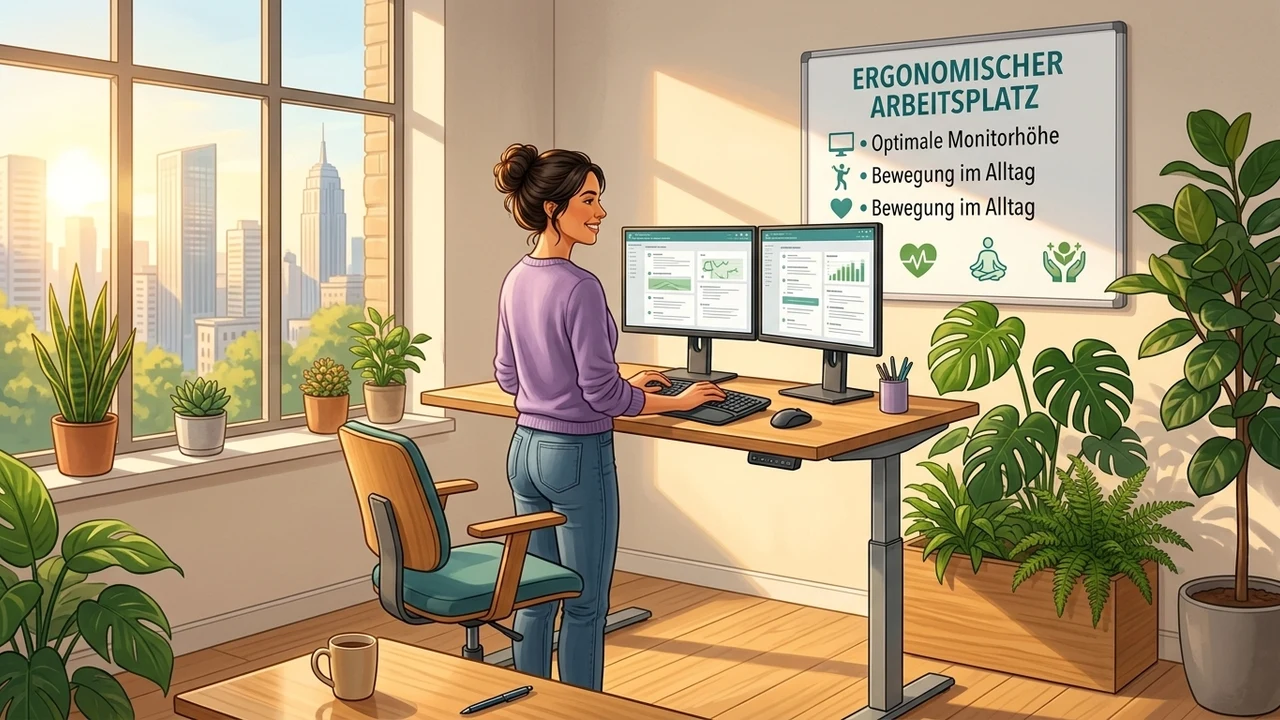
The ergonomics tip of the week sounds unassuming – and that's exactly right. Not the big campaign that launches once a quarter and is then forgotten, but the small, consistent nudge, week after week.
Why knowledge in small doses works better than in one big package A one-off ergonomics workshop rarely stays top of mind for more than two weeks. By contrast, receiving a short tip every week – today about the right monitor distance, next week about shoulder positioning, the week after about optimal keyboard placement – gradually builds an awareness that changes behavior for good. Micro-learning isn't a buzzword; it's a well-documented teaching method.
The right format determines whether it gets used A well-worded tip that takes 30 seconds to read gets read. A lecture you have to sign up for gets ignored. The most effective formats: a short paragraph in the weekly newsletter, a post in the internal chat, a small poster in the break room. Anyone who packages the tip into a concrete call to action – "Now briefly squeeze your shoulder blades together and release" – gets a participation rate no seminar can match.
How to put it in place
- 1Bestand aufnehmen: Welche Arbeitsplätze haben höhenverstellbare Tische, welche Stühle sind veraltet?
- 2Eine ergonomische Fachkraft oder Betriebsärztin für eine Arbeitsplatzberatung anfragen
- 3Ergonomie-Checkliste für den Schreibtisch (Bildschirmhöhe, Sitzposition, Armhaltung) besorgen oder erstellen
- 4Budget für Anschaffungen klären und Prioritätenliste vorbereiten
- 5Kurzschulung zur richtigen Haltung und Tischeinstellung ansetzen – live am realen Arbeitsplatz
- 6Jeder Person zeigen, wie sie ihren eigenen Stuhl und Tisch korrekt einstellt
- 7Ergonomie-Checkliste austeilen, damit jede die eigene Einstellung selbst prüfen kann
- 8Beschaffung schrittweise umsetzen und neue Tische/Stühle nach Prioritätenliste ausrollen
- 9Erinnerung an Haltungswechsel etablieren (z.B. stündlich kurz aufstehen, Sitz-Steh-Wechsel)
- 10Individuelle Nachjustierung anbieten für alle, die mit ihrer Einstellung noch nicht zurechtkommen
- 11Rückmeldung einholen: Haben sich Beschwerden (Rücken, Nacken, Handgelenke) verringert?
- 12Prüfen, welche Arbeitsplätze noch nicht optimal ausgestattet sind, und Nachbeschaffung planen
- 13Ergonomie als festen Punkt bei der Einrichtung neuer Arbeitsplätze verankern
What you need
- Effort
- half a day
- Cost
- with budget
- Duration
- 8-16
- Setup
- 240 min
- ✓ Sustainable impact
- ✓ Measurable results
- ✓ Legally relevant
Eligible for funding: up to €600 tax-free
As part of a structured workplace health process, this measure is tax-free under § 3 no. 34 of the German Income Tax Act (EStG) up to €600 per employee per year — BGF-Kompass supplies the process. Certified offers (e.g. from Upfit) are additionally subsidised by statutory health insurers under § 20b SGB V.
Health-insurer funding & tax: how to apply →Adopt it for your company
Register for free — and the measure is ready to go in your cockpit: invitation, feedback survey and appointment are already set up. First cycle, first numbers for the boss.
Start for free nowRather take a look first? To the live demo →
Contributes to
Measure the impact with
Action field
Ergonomics & Occupational Safety →A fitting occasion
Related best practices
Not sure where to start? 5-minute self-check →