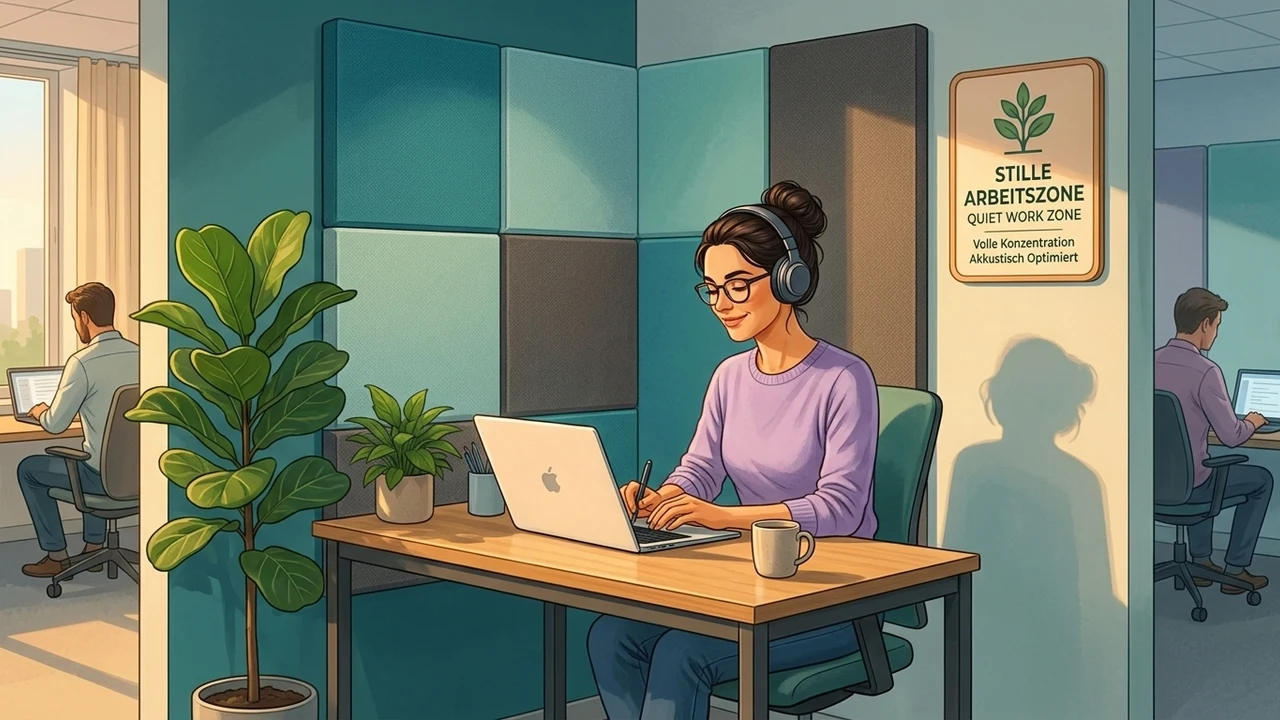
Noise in the office is one of the most commonly underestimated stress factors – not because it's loud, but because it's constantly present. Background conversations, phone calls on speaker, ringing phones: it all adds up to a baseline cognitive load that costs concentration and mood.
What a week of conscious awareness changes The noise reduction week doesn't work through bans, but through attention. Anyone who actively observes for a week when they themselves generate noise – a loud phone call, music without headphones, a conversation louder than necessary – develops an awareness that lasts afterward. Colleagues who kindly point out noise sources to one another create an office culture that doesn't need rules.
What lasts beyond the week An action week often leads to concrete, lasting agreements: a zone for focused work, the introduction of headphones as a signal, phone booths for important calls. These structural measures have a more lasting effect than any awareness campaign, because they make the behavior easier instead of appealing to goodwill.
How to put it in place
- 1Erhebe anonym, wo Lärm und Störungen am meisten belasten (Großraum, Telefonzonen, Durchgänge).
- 2Identifiziere geeignete Flächen für Ruhe-Zonen und kläre den Bedarf an akustischen Hilfsmitteln (Trennwände, Kopfhörer).
- 3Entwirf eine einfache Kopfhörer- und Silent-Hours-Regel gemeinsam mit ein bis zwei Teamvertreter:innen.
- 4Stimme Budget und Umsetzung mit Geschäftsführung und Facility ab.
- 5Stelle die neuen Regeln im Team vor: Was bedeutet „Kopfhörer auf = bitte nicht stören", wann gelten Silent Hours.
- 6Kennzeichne Ruhe-Zonen sichtbar und erkläre, wofür sie gedacht sind (fokussiertes Arbeiten, kurze Pause).
- 7Bitte die Führungskräfte, die Regeln vorzuleben und aktiv zu unterstützen.
- 8Achte in den ersten Wochen darauf, dass die Regeln respektiert werden, und sprich Störungen freundlich an.
- 9Sorge dafür, dass Ruhe-Zonen frei bleiben und nicht zweckentfremdet werden.
- 10Sammle laufend Hinweise, wo es noch hakt (z.B. laute Meetings in offenen Bereichen), und justiere nach.
- 11Frage anonym ab, ob sich das Störungsempfinden und die Konzentration verbessert haben.
- 12Prüfe, welche Regeln greifen und welche angepasst oder klarer kommuniziert werden müssen.
- 13Verankere die bewährten Regeln dauerhaft im Team-Alltag und im Onboarding neuer Mitarbeitender.
What you need
- Effort
- half a day
- Cost
- under €100
- Setup
- 120 min
- ✓ Immediately noticeable
- ✓ Low cost
- ✓ High impact
Eligible for funding: up to €600 tax-free
As part of a structured workplace health process, this measure is tax-free under § 3 no. 34 of the German Income Tax Act (EStG) up to €600 per employee per year — BGF-Kompass supplies the process. Certified offers (e.g. from Upfit) are additionally subsidised by statutory health insurers under § 20b SGB V.
Health-insurer funding & tax: how to apply →Adopt it for your company
Register for free — and the measure is ready to go in your cockpit: invitation, feedback survey and appointment are already set up. First cycle, first numbers for the boss.
Start for free nowRather take a look first? To the live demo →
Contributes to
Measure the impact with
Action field
Ergonomics & Occupational Safety →A fitting occasion
Related best practices
Not sure where to start? 5-minute self-check →