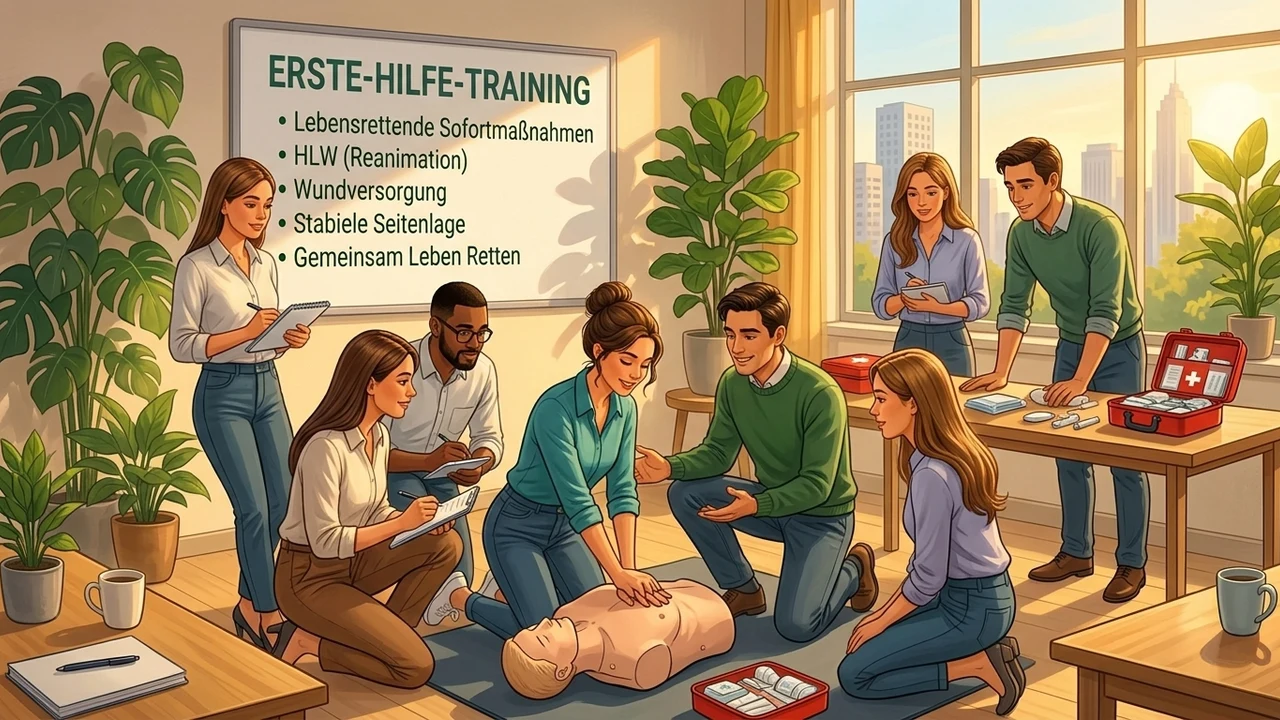
Basic first-aider training is mandatory. What happens afterward is often forgetting. The refresher picks up where the original training left off – with what has changed since then, and with the hands-on component that makes the difference in a real emergency.
What studies say about first-aider competence After three to five years without repetition, a significant portion of first-aid knowledge has faded – especially for chest compressions, where technique and rhythm are decisive. A short refresher – two to four hours, with a manikin, a defibrillator, and current guidelines – reactivates this competence far more effectively than a repeat lecture. The fear of acting decreases, and the likelihood of actually stepping in increases.
What sets a good refresher apart from a formal box-ticking exercise The difference lies in the share of hands-on practice. Anyone who spends 80% of the time listening and 20% practicing forgets again quickly. Anyone who instead works hands-on with the manikin and defibrillator, with only the key updates explained concisely, retains what matters. The goal isn't a new certificate but confidence to act.
How to put it in place
- 1Bei der zuständigen Berufsgenossenschaft die Kostenübernahme für die Auffrischung klären und das Kontingent an geförderten Plätzen abrufen.
- 2Zertifizierten Kursanbieter buchen und Inhouse-Termine festlegen, damit die Auffrischung im Betrieb statt extern stattfindet.
- 3Teilnehmenden-Liste erstellen und prüfen, wessen letzte Schulung länger als zwei Jahre zurückliegt – diese zuerst einplanen.
- 4Einladung mit Terminwahl verschicken und die Auffrischung als Gesundheits-Event statt als lästige Pflicht rahmen.
- 5Anmeldungen sammeln und Führungskräfte bitten, ihren Teams die Freistellung für den Kursslot verbindlich zuzusichern.
- 6Schulungsraum mit Übungsmaterial, Getränken und Verpflegung vorbereiten, damit der Tag angenehm wird.
- 7Praxisnahe Szenarien aus dem eigenen Betrieb einbauen lassen, etwa Notfall an der Maschine oder im Büro.
- 8Anwesenheit dokumentieren und die aktualisierten Ersthelfer-Nachweise für die Personalakte sammeln.
- 9Teilnahmequote gegen die Soll-Liste abgleichen und Nachzügler für einen Ersatztermin nachfassen.
- 10Kurzes Feedback zu Trainer und Praxisnähe einholen, um den Anbieter fürs nächste Jahr zu bewerten.
- 11Aktuelle Ersthelfer-Zahl gegen die gesetzliche Mindestquote prüfen und den Aushang im Betrieb aktualisieren.
What you need
- Effort
- half a day
- Cost
- under €100
- Duration
- 1 Tag
- Setup
- 120 min
- ✓ Mandatory + BGF combined
- ✓ Employer's liability insurance pays
- ✓ Life-saving
Eligible for funding: up to €600 tax-free
As part of a structured workplace health process, this measure is tax-free under § 3 no. 34 of the German Income Tax Act (EStG) up to €600 per employee per year — BGF-Kompass supplies the process. Certified offers (e.g. from Upfit) are additionally subsidised by statutory health insurers under § 20b SGB V.
Health-insurer funding & tax: how to apply →Adopt it for your company
Register for free — and the measure is ready to go in your cockpit: invitation, feedback survey and appointment are already set up. First cycle, first numbers for the boss.
Start for free nowRather take a look first? To the live demo →
Contributes to
Measure the impact with
Action field
Prevention & Early Detection →A fitting occasion
Related best practices
Not sure where to start? 5-minute self-check →