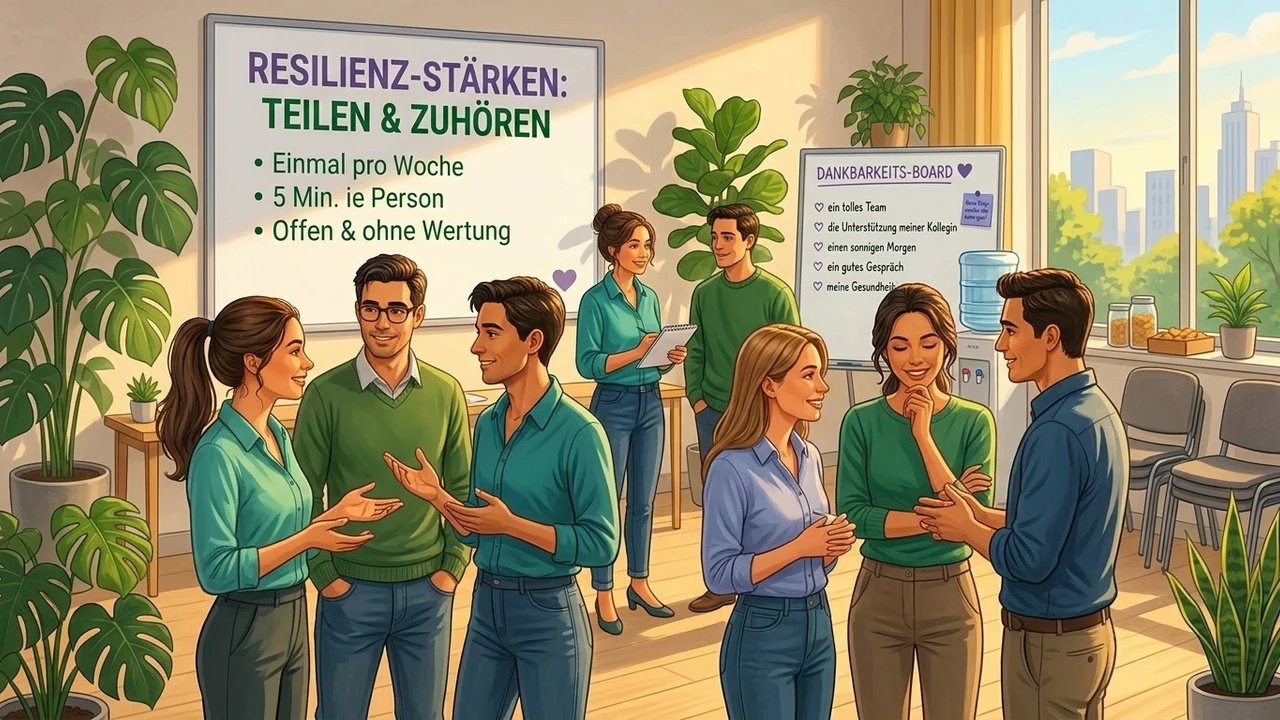
Resilience is not a personality trait you either have or don't – it's a skill you can develop. That's the most important message for every employee who believes stress is just something they have to live with.
What 6 to 8 weeks of training changes A structured resilience training program doesn't focus on avoiding stress, but on processing it: How do I recognize warning signs in myself? What are my personal exhaustion triggers? Which strategies help me bounce back faster – after a difficult day, after a failed project, after a conflict? These questions can be learned, and the effects are well documented in longitudinal studies: fewer absences, higher job satisfaction, lower burnout risk.
Which format delivers the best results Blended learning – a combination of short online modules and regular live group sessions – outperforms pure self-study courses, because they lack the social anchor. Discovering in the course that colleagues face similar pressures is relieving in itself. This normalization is a core effect of the group format that no app can replicate.
How to put it in place
- 1Wähle eine:n zertifizierte:n Resilienz-Trainer:in oder Psycholog:in mit BGF-Erfahrung aus und hole zwei bis drei Angebote ein.
- 2Lege die acht Themenblöcke gemeinsam mit der Trainerin fest (z.B. Umgang mit Veränderung, Grübeln stoppen, Grenzen setzen, Selbstfürsorge).
- 3Reserviere einen ruhigen Raum für die wöchentliche Reihe und begrenze die Gruppe auf 8–12 Teilnehmende für echten Austausch.
- 4Kläre mit der Geschäftsführung, ob die Teilnahme während der Arbeitszeit erfolgt, und halte das verbindlich fest.
- 5Verschicke eine persönliche Einladung mit den acht Terminen, Ziel der Reihe und dem Hinweis „vertraulicher Raum, keine Leistungsbewertung".
- 6Bitte um verbindliche Anmeldung für die gesamte Reihe, da die Blöcke aufeinander aufbauen.
- 7Kommuniziere klar, dass Inhalte im Raum bleiben, um Offenheit zu ermöglichen.
- 8Sorge vor jedem Termin für den Raum, Getränke und ungestörte Atmosphäre (Telefon-Umleitung, „Bitte nicht stören"-Schild).
- 9Ermutige die Teilnehmenden, zwischen den Terminen die kleinen Übungen im Alltag auszuprobieren.
- 10Behalte die Teilnahmequote im Blick und sprich Personen mit häufigen Fehlterminen wertschätzend an.
- 11Hole anonymes Feedback zu Nutzen, Trainerin und Übertragbarkeit in den Arbeitsalltag ein.
- 12Besprich mit der Trainerin, welche Themen besonders trugen und ob eine Auffrischung sinnvoll ist.
- 13Werte aus, ob eine zweite Runde für weitere Teams startet, und dokumentiere die Ergebnisse für die BGF-Steuerung.
What you need
- Effort
- multi-day
- Cost
- with budget
- Setup
- 960 min
- ✓ Profound impact
- ✓ Sustainable
- ✓ For all levels
Eligible for funding: up to €600 tax-free
As part of a structured workplace health process, this measure is tax-free under § 3 no. 34 of the German Income Tax Act (EStG) up to €600 per employee per year — BGF-Kompass supplies the process. Certified offers (e.g. from Upfit) are additionally subsidised by statutory health insurers under § 20b SGB V.
Health-insurer funding & tax: how to apply →Adopt it for your company
Register for free — and the measure is ready to go in your cockpit: invitation, feedback survey and appointment are already set up. First cycle, first numbers for the boss.
Start for free nowRather take a look first? To the live demo →
Contributes to
Measure the impact with
Action field
Stress & Mental Health →A fitting occasion
Related best practices
Not sure where to start? 5-minute self-check →